


Kuih Jongkong is a traditional dessert that has a shared history across southeast asia especially with Singapore, Malaysia and Indonesia. It is enjoyed for its combination of fragrant pandan, creamy coconut milk and rich coconut sugar.
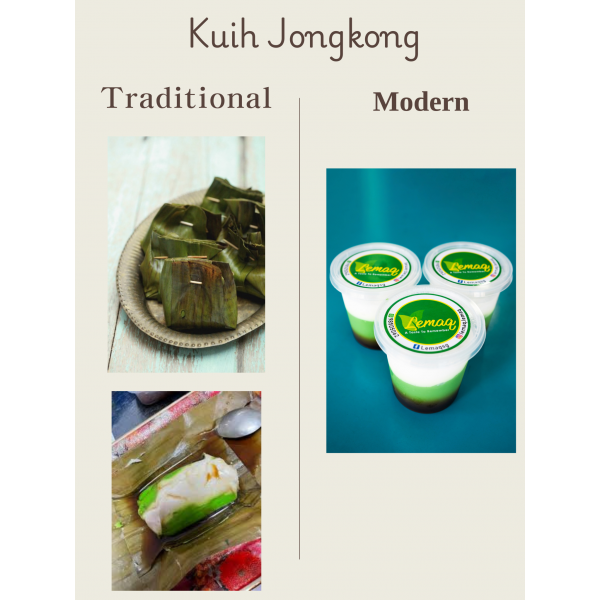
Traditionally, Kuih Jongkong is wrapped in banana leaves and steamed. The fragrance of the banana leaves will slowly be infused to the Kuih Jongkong and give an additonal depth to the flavor of the dessert. However, there is a downside in using banana leaves as a packaging. Banana leaves require cleaning, cutting, softening and careful folding. They also vary in size and may tear or leak. These would lead to practicality issues especially if making large batches of Kuih Jongkong.
As Jongkong became more widely prepared for takeaway and larger-scale production, plastic cups offered a practical alternative to banana leaves. They provide consistent portions, prevent leakage and shows the beautiful layers of pandan, coconut milk and coconut sugar. While this modern presentation offers greater convenience, the traditional banana leaf contributes a natural fragrance and nostalgic charm that remain deeply associated with Jongkong.
Rather than viewing traditional and modern Jongkong as opposites, we can appreciate them as two expressions of the same culinary heritage. The banana-leaf presentation celebrates familiarity and traditional craftsmanship, while the modern cup makes Jongkong more convenient and accessible to today’s customers. It can also encourage a younger generation to discover a dessert they may be trying for the first time.
Although the presentation of Kuih Jongkong may continue to evolve, the heart of the dessert should remain unchanged. Its fragrant pandan, creamy coconut milk and rich coconut sugar are the flavours that give Jongkong its distinctive character. By preserving these qualities while adapting how it is served, Kuih Jongkong reminds us that heritage food can have a place in the present without losing what made it special.
